

Day one of the TBI Global Triathlon Conference in Roth saw the conference wrap-up, only to be followed by an interesting tour of Schloss Ratibor. The castle tour was introduced by Ralph Edelhaeusser, Mayor of Roth, and gave conference delegates a chance to learn the history of the castle and the town/region over the past few centuries.
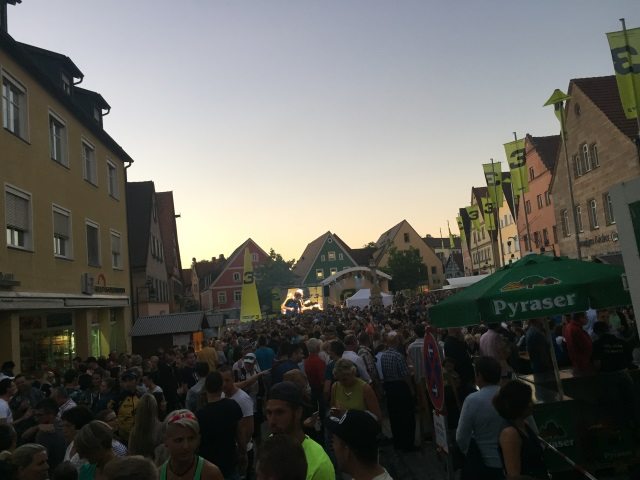
The day concluded with the Challenge Roth Welcome Party, Powered by Bayern3, which was situated in the main Market Square of Roth. Plenty of beer was flowing on the Friday evening and the team at Challenge Family counted 10,000 locals and athletes in attendance.
During one band’s performance, the crowd of mainly Germans were chanting the lyrics from one particular song. It was very surprising to hear the crowd singing ‘football’s coming home’ and other words from ‘Three Lions’, which was the England football team’s song for the Euro 96 soccer tournament. Apparently the song remains popular in Germany and even made the charts in the country.
It was nice to see England and other nationalities uniting with Germany over sport in Roth. The scale of the Welcome Party on Friday evening helped underline the passion that the region has for the Challenge Roth event, as a good reason to party along with a willingness to get behind athletes on race day.

An audience with Macca
Day two of the conference began with Chris ‘Macca’ McCormack. He gave his perspectives from ‘Both Sides of the Fence: Pro Athlete and Now Businessman’. Macca spoke at length and gave a number of insights into his professional athlete career and his business activities.
We can’t do justice to all the many points he made. So we have summarized some of its views below:
- “You don’t do triathlon to be rich.”
- “There is a definition of professionalism that is not about the names or number of sponsors on an athlete’s vest. It’s about the way pro athletes conduct themselves.”
- “When I was at races in the early part of my career I made sure that I said something when the camera was in front of me. I was an agitator. I made sure that I was the guy the media was talking about. The sport of triathlon was not big enough and I felt that I needed to be provocative to get my voice heard – and to give exposure for my sponsors.”
- “Having spent time raising funds for charity, donating my appearance fee to charity, I then realised how powerful sport can be.”
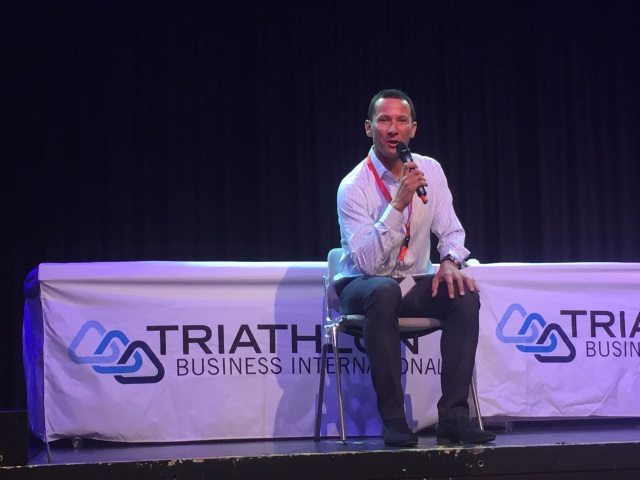
Macca then turned to his business activities in recent years:
- “I opened up dialogue with Challenge Family, as I liked the company’s values, and then signed as an ambassador with Challenge for 10 years.”
- “Working with Thanyapura in Phuket is great from a coaching perspective. [Macca is Thanyapura Phuket’s Executive Chairman.]
- “The main asset for professional triathletes are the amateurs. It is essential for pros to be proactive when it comes to age groupers. They should assist [age groupers] in all ways. This gives value to sponsors and, if pros are keen on coaching as a next step in their careers, it provides a pipeline for future business.”
- “MaccaX is my coaching business and it has a really engaged community – with over 31,000 members it provides a launchpad.”
- “As a coach I now sponsor some of the pros. So, I’m on the other side of the fence now.”
He added:
- “Pro triathletes can be whingers. They can take a victim-like approach. But being a pro is not a right; it’s a privilege. Triathlon is not a sport like American Football where there are so many riches on offer. In triathlon, pros need to work hard and, above all, be professional.”
- “Pros have a recipe for success that can influence age groupers, and that can transcend the sport. They just need to get the message out there.”
- “IRONMAN has a fantastic product; and Kona is the pinnacle. I will always love Kona. It is where it all started in so many ways.”
- “Challenge doesn’t need to compete with IRONMAN. It is an alternative product. I see that Challenge embraces the history of its race. It is the history and the back-stories of the events, that take people to Roth and to Kona.”
- “Roth is the best race on the planet. With more crowds than anywhere in the world, the spectators are informed and engaged.”
- “It is the responsibility of IRONMAN and Challenge to tell the history. This will help spread the word and get more people turned onto the sport.”
- “We need to stick to why this sport is so cool. With time, triathlon will have real substance.”
- “Now we also see that sports tourism is being taken more seriously. We travel, we stay, we spend. This will be a big deal in the years to come.”
Turning to the athlete-sponsor relationship, Macca continued:
- “The athlete should get involved in sponsor discussions directly, not just leave this to third party outsourcing via an agent.”
- “Pros should think, ‘what do I bring to the table?'”
- “The engagement between athlete and their audience should be organic and real. The age grouper isn’t stupid. They know when they are being sold to. So, sponsor messages should be authentic and delivered in an authentic way by the sponsored athlete.”
- “Age groupers need to understand the ‘why’ behind the sponsorship – why the product is being used.”
When asked about the ratio that pro athletes should look for, in terms of balancing out sponsorship income versus race winnings, Macca started by saying, “It’s probably linked with the definition of what professional triathlete means. Ultimately, it has to be an income, a way of earning a living. Otherwise you’re just a fit guy without a job!”
He added, “Jan Frodeno is the most professional triathlete out there. He’s a consummate professional . He’s professional in all his dealings. Jan has his own physio, photographer, etc. But he had them before he started to make money. He got what was needed at the outset; and this has paid off.”
Macca continued, “At least 70% of pro triathlete income should come from sponsorship. So, if you unwind what this means, we can see that pro triathletes need to devote time to engagement with their audiences. It’s easy to go out and train and race. It takes more thought, and professionalism, to really be a pro.”
More from day two of the TBI conference will be posted tomorrow…
www.triathlonbusinessintl.com
www.challenge-family.com