


Continuing our summary of the second TBI Global Triathlon Conference, day one of the industry gathering continued with the first panel discussion. This was headlined ‘The State of Triathlon in Europe, UK and the World’. It was moderated by Jené Shaw, Senior Editor at Triathlete Magazine.
The panellists were Zibi Szlufcik, CEO of Challenge Family; Frank Wechsel, CEO of spomedis GmbH, the publisher of Triathlon Magazine in Germany; and (me!) Gary Roethenbaugh, Managing Director of MultiSport Research.
Each of the panellists began with a 5-10 minute presentation before the discussion opened up into the main panel session.
Athlete experience matters to Challenge Family
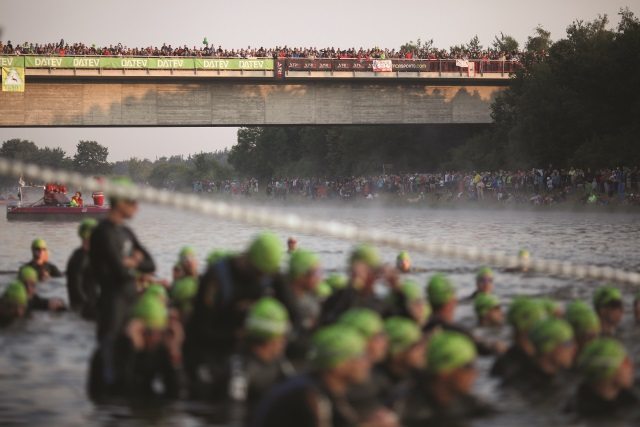
First up, Zibi gave a comprehensive overview of the Challenge Roth event, noting that across the race week a total of 12,000 athletes competed this year, with women-specific events and kids events proving popular. The main event, Challenge Roth, saw athletes from 60 nations participate and 250,000 spectators on race day. Zibi noted that a 10% increase in prize money had been implemented in 2015.
He added that, overall, the Challenge Family series will spend US$3.2 million on athletes this year – for prize money and athlete assistance. Zibi continued to point out the media coverage and reach for DATEV Challenge Roth with its 170,000,000+ ‘unique eyeballs across television, print and digital coverage.’
Zibi then went on to explore the unique properties of the global triathlon community. His presentation pointed out that ‘triathletes have social power, [they] are passionate, key influencers and early adopters.’
Market data from MultiSport Research
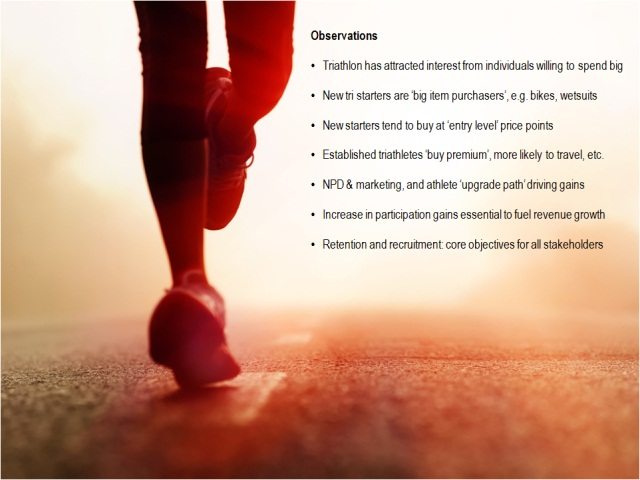
Next up it was my turn to run through a few slides – showing the international trend in participation for triathlon and drilling into the markets of the US and UK.
Working with the International Triathlon Union (ITU) in 2014, MultiSport Research built an estimate of total triathlon participation worldwide. At 2.1 million unique active racing triathletes in 2013, initial data from ITU’s national federations across the globe points to a continuation of healthy growth in 2014.
Preliminary figures indicate a 10% year on year uplift for triathlon in 2014. Across the globe, there are a number of markets outperforming the global average. And these emerging markets will be the ones to watch.
Drilling into the US and UK markets, the presentation took data from the TBI US Triathlon Market Study and the separate TIA market study in the UK. Data was presented on total market value, per capita expenditure, the role of online, etc. A final summary noted the importance of triathlete recruitment and retention in order to ensure commercial sustainability in the years ahead.
Spomedis/Triathlon mag introduces ‘Stefan’
Frank Wechsel, CEO of spomedis GmbH the publisher of Triathlon Magazine in Germany, then gave an overview of the publisher’s experience of the German triathlon marketplace. Frank gave a background to the magazine, which has been publishing for triathletes in markets such as Germany, Austria, Switzerland and Luxembourg for 15 years.
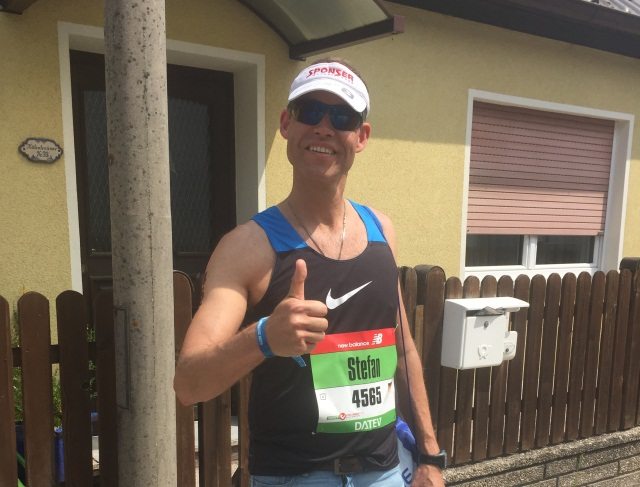
Frank noted that from a variety of sources, such as reader surveys, Triathlon Magazine has found that the average triathlete in Germany is male, almost 40 years old, with a salary of €83,000 a university education and a full time job. He added that, as one of the most common birth names in 1975, the average triathlete is called ‘Stefan’.
Continuing to explore the attributes of ‘Stefan’, Frank added that Stefan trains on average for 11.1 hours per week; he races more than five times per year and has been an active triathlete since at least 2010. The presentation continued to explore areas such as average expenditure on bikes, the frequency of running shoe and wetsuit purchases, and the importance of training camps.
On race day at DATEV Challenge Roth, on the Sunday, we bumped into ‘Stefan’..!!!
Panel
The three short presentations were followed by a panel discussion moderated by Jené Shaw, Senior Editor at Triathlete Magazine. With lots of questions from conference delegates, there were a variety of subject areas covered, from the role of broadcast TV & social media, through to premium pricing and the challenges to be overcome in continuing to raise triathlon participation overall.
The conference then took a break for lunch. After this, the popular speed networking session gave delegates a chance to speak directly with each other on a one-to-one basis.
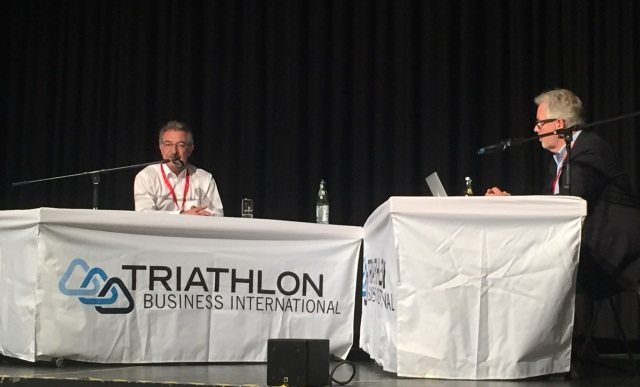
The final conference session of the day was ‘Activation and Company Benefits as Title Sponsor of Challenge Roth’, which saw conference lead Jack Caress of TBI interview Prof Dieter Kempf, CEO at DATEV eG. The interview gave Dieter Kempf an opportunity to highlight a number of points:
- DATEV itself has 7,000 employees, with 6,000 of these living and working in the Roth/Nuremberg/Schwabach region of Bavaria. The impact of the Challenge Roth event is particularly important to DATEV employees.
- DATEV Challenge Roth is an event for everyone in the area. It also has a wide impact throughout Germany. So, the initial sponsorship made sense for DATEV, an IT systems company.
- Over 30 company teams had been brought to Roth to ensure activation of DATEV’s sponsorship of the event. These relay teams equated to 90 DATEV staff and customers; and participation in the event by the company’s staff and its partners was supported by internal marketing.
- From a corporate wellbeing and CSR perspective, DATEV sees triathlon as a key sport to support its objective of a healthy mind and body throughout the day.
- As a cooperative organisation, DATEV found a lot of similarities when dealing with Challenge Family, as a family owned organisation.
- While he would not be drawn on the total value of its title sponsorship, Dieter Kempf did stress that after its initial sponsorship of Challenge Roth the board wanted to make a long-term commitment. This resulted in an extension of the sponsorship to 2021. The first two years were a trial for DATEV. After this point, both sides were willing to extend, and the company has been happy with its sponsorship thus far. It measures the impact generated by the event, in terms of spectator numbers, broadcast minutes, etc. Coupled with this, DATEV monitors the positive impact of the event on the local community and society in general.
- Jack asked if Dieter had any advice for triathlon events seeking to bring in non-endemic sponsors, i.e. those companies that are beyond triathlon and are not active within the triathlon marketplace. Dieter noted that local companies would be an important starting point, as these companies should see the benefit of event activation on the ground. He also added that a key question for the DATEV board was ‘how clean is the sport?’
- The issue of doping was a concern and DATEV wanted to establish categorically that this was being dealt with. He said, “From a layman’s perspective there is something in the back of the brain that asks, ‘are we sure it’s clean?’ given the endurance required to finish and compete at this level. It has been a problem for cycling and triathlon will lose sponsors if doping becomes a problem.”
- He confirmed that the sponsorship agreement with Challenge Family has a clause to protect DATEV’s investment from any doping issues should they arise. He therefore advised the sport of triathlon to focus on being clean, and on what can be achieved by the human body in its natural state. This is particularly attractive to sponsors.
As a final observation of day one, in his introduction to delegates on the first day, Klaus Preisler, Founder & CEO of Lapio gave an interesting analogy.
Although a sponsor of the conference, Klaus chose not to talk through Lapio’s cloud-based software and its benefits for those event directors who were present. Instead he cited an interesting example of a female athlete who intended to run hard on the marathon section at this year’s Challenge Roth event.
On hearing this, Klaus had cautioned the athlete. He said to those present at the conference, “The athlete should consider the impact of setting out on the marathon too hard. Ultimately, the liver won’t like this; and the liver is key in its role of regulating the supply of fuel to the body.”
He continued, “The liver helps your body by providing it with energy, fighting off infections and toxins, regulating hormones and much, much more. In the same way, the body of the triathlon industry is very complex and it depends on the liver.”
He added, “So, [TBI co-founder and President] Jack Caress is really the liver of triathlon!!!”
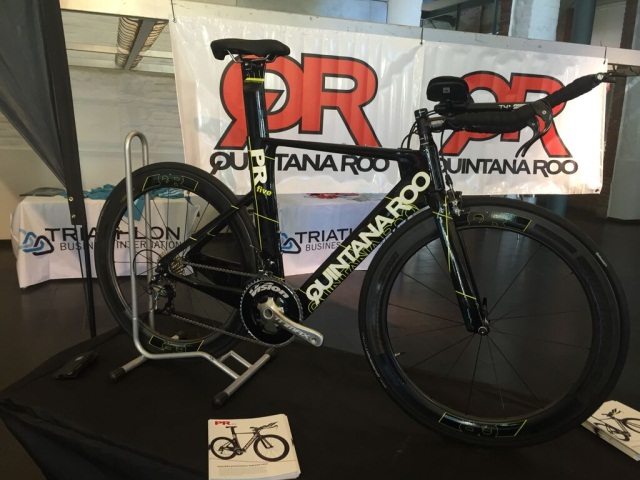
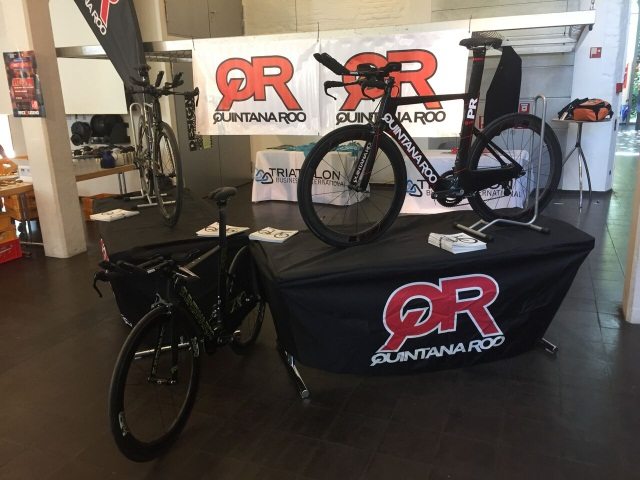
Showcasing the latest QR bike – the PRfive
Friday evening finished with an unveiling reception, as ‘Quintana Roo – the Next Generation in Triathlon-Specific Bikes’ was presented. Here, Peter Hurley, CEO at American Bicycle Group (QR & Litespeed) and Brad DeVaney, Head of Engineering at American Bicycle Group gave an interesting overview of the design and market positioning of the latest QR bike – the PRfive.
More to follow on the new QR PRfive in a separate post; and more from day two of the TBI conference will be posted in the coming days…
www.triathlonbusinessintl.com
www.challenge-family.com