


Specialist cycling insurer Bikmo has, for the fifth year in a row, lifted the lid on its claims data for 2022. Looking at all of its insurance claims from riders in 2022, Bikmo has identified a number of underlying themes over the last five years and predicted what the key insurance trends for 2023 might be.
Despite a 22% drop in total bike sales in the UK following the Covid boom, the volume of claims processed by Bikmo increased by over 25% in 2022.
Bikmo previously saw a rising trend in claims being made for bikes at home over the last three years, with these claims representing 10% of the total in 2019 and rising to 24% in 2021. The proportion of claims from the home decreased slightly to 23% in 2022.
Bikes are still more at risk when away from home, according to the data and based on previous years, Bikmo adds that it isn’t surprised to see the slight decrease to ‘at home’ claims, with home burglary statistics in the UK continuing to decrease.
Theft claims made up 57% of all claims in 2022, an increase of 4% from the previous year. Accidental damage claims remained high and is a significant reason why cycle insurance remains important to riders.
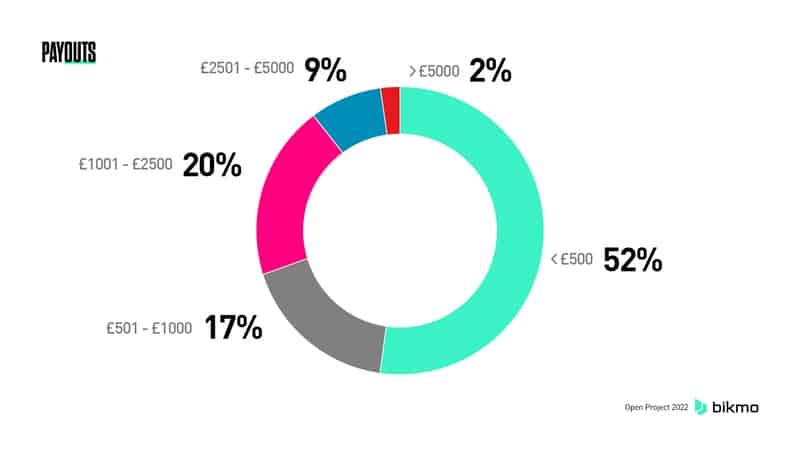
As in 2021, over 50% of Bikmo’s claim payouts continue to be for bikes and gear under £500 in 2022. Over 30% of claims were for bikes and gear over £1,000, with Bikmo protect different categories of cyclists.
Almost 40% of claims in 2022 were for components, clothing, and accessories rather than a full bike.
This split of claim items continues to follow the trend of previous years, almost tracking identically to Bikmo’s 2020 and 2021 data.
For the first time since Bikmo started collecting its ‘Open Project data’, most claims did not come from road cycling. Road cycling made up 34% of claims in 2022 (50% in 2021), with commuting now making up nearly half of claims with 48% (33% in 2021).
When factoring in the increase in claims for e-bikes from 10% to 16% of all claims, and that 74% of those were for e-commuter bikes, the explains the change in the majority discipline.
Bikmo’s CEO David George said “2022 has been another unprecedented year. Whilst still facing the challenges of Covid at the beginning of the year, a cost of living crisis and the fall in total bike sales, it is positive to see the continued positive changes in the way we travel, with people opting for two wheels and riders taking up new disciplines.
“Continuing our commitment to the principles of openness and transparency, we have again made available insights derived from our claims data for 2022. By doing so, we aim to share the emerging trends and make informed predictions about the future.”
Predicting trends in 2023, he added “We’re certain insurance policies bought for e-bikes will exceed those bought for mechanical bikes in 2023 following continued strong growth in e-bike sales, and e-bike owners being up to 3x more likely to insure their bike, according to Cycle Industries Europe data.
“We expect a further increase in fraudulent claims in 2023 as the cost of living crisis continues and the average value of bikes continues to increase with the boom of e-bikes.
“The adventure bike category will see an increase in claims as more people opt for trails over tarmac.
“Finally, we will continue to see a boom in alternative ownership models in bike leasing and subscription as more employers and governments see the huge benefit of facilitating bike ownership and use for mental and physical health and environmental factors.”