


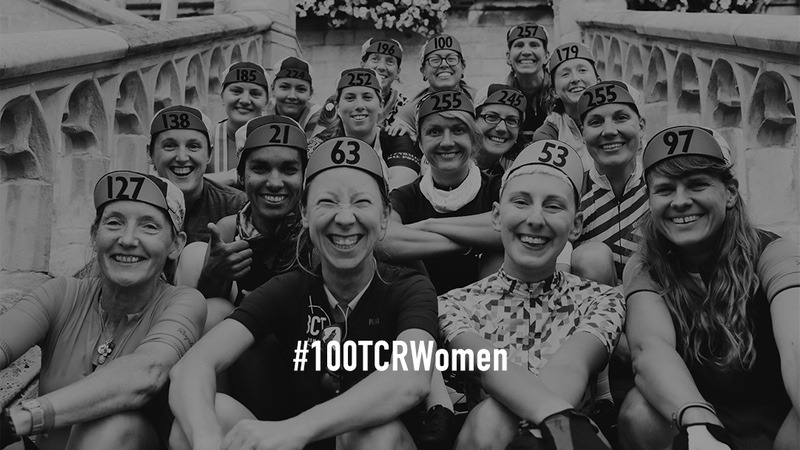
Lost Dot, the organisation behind the Transcontinental Race (TCR), the self-supported ultra-endurance bike race across Europe, is launching a campaign to change female participation levels.
Under the banner of #100TCRWomen, Lost Dot aims to inspire 100 women to take on the challenge of TCRNo11, more than doubling the largest women’s field in the race’s history.
“Our goal with this campaign is to spark excitement and inspire all the women who’ve ever thought, ‘One year, I want to race the TCR’,” said TCRNo11 Race Coordinator, Hannah Larbalestier.
“We want to build a collective vote of confidence that empowers them to make TCRNo11 that year.”
In the first edition of TCR, held in 2013, only one woman lined up on Westminster Bridge in London to race to Istanbul, Türkiye. The 10th edition of the Transcontinental in July 2024 saw the largest women’s field to date, with 41 women lining up in the Roubaix Velodrome to start a journey from northern France to Istanbul.
Last year, out of 328 riders in total, female representation was 12.5%. After over a decade of the Transcontinental Race, the organisers are striving to more than double that number.
TCR women’s participation breakdown over the last 10 years:
- TCRNo1 – 1
- TCRNo2 – 4
- TCRNo3 – 8
- TCRNo4 – 19
- TCRNo5 – 23
- TCRNo6 – 21
- TCRNo7 – 40
- TCRNo8 – 26
- TCRNo9 – 37
- TCRNo10 – 41
“This campaign may seem ambitious to some, but when you look at the numbers, it’s really not even that revolutionary,” said Lost Dot Media Manager, Taylor Doyle.
“I know this community and I know that there are more than capable women out there who could take on a challenge like the TCR, but we know that women are less likely to sign up due to a myriad of factors.
“One of those factors is not feeling 100% prepared. We hope that this campaign connects women interested in racing with women who have experience that they are willing to share.”
Doyle continued, “Ultimately, a race with a plentiful number of women is an exciting race, whether you’re a competitive rider and going for a top spot, or a rider who is targeting the triumph of a finish.
“When you’re less of a minority, it’s a more inclusive experience. Nothing else can replace the buzz and exhilaration of riding and racing alongside other strong and determined women.”

Last year’s fastest woman, Jana Kesenheimer, said “If more women participated in races, the increased performance density would make the events more exciting – creating more enjoyment for ourselves and boosting our visibility as women in cycling.
“But most importantly, it would be such a shame if people who dream of racing across an entire continent, through cultures and across borders, didn’t dare to try.”
To back up its goals, Lost Dot has organised a programme of community events to support women in reaching the start line. It also held a women’s-only workshop and Q&A session with TCR veterans including TCRNo10’s fastest woman, Jana Kesenheimer, and TCRNo7 overall winner, Fiona Kolbinger, online on December 12, 2024.
This was the first in a series of workshops for women interested in TCR, delivered by experienced riders and women from the Lost Dot team. The women’s field will also be able to tap into the collective knowledge in a dedicated WhatsApp community. Any women interested in joining the community can request an invite via email at tcr[at]lostdot.cc.
With the route launch for TCRNo11 now complete (as of November 29th), prospective riders can examine the race and start to mentally map their way from one side of the continent to the other. Applications to race opened in early December, with applications closing for all on December 31, 2024.