



The reported benefits of the ‘purple wonder root vegetable beetroot’ are growing in the world of sports science. New independent research from the University of Exeter has demonstrated, for the first time, that consumption of a single 7cl concentrated BEET IT Sport shot can ‘significantly improve sprint and high-intensity intermittent running performance’.
One BEET IT Sport shot boasts 400mg of natural dietary nitrate – the key active ingredient of beetroot and, according to the company, the optimum amount needed to boost sporting performance.
Beet It Sports shots are used for a number university research projects worldwide into the sporting and medical benefits of nitrate, because they are a convenient and consistent natural source of nitrate. The variable nitrate content found in raw beetroots and other nitrate rich vegetables (e.g. spinach, chard and lettuce) are seen to be too unreliable for research.
However, vegetables (not cooked as nitrates can be lost) can be a natural nitrate source. On average to obtain the optimum 400mg dose of natural dietary nitrate (one 70ml BEET IT Sport shot), an athlete would have to consume (see chart) more than 300g of uncooked beetroot, 250g of uncooked Swiss Chard or 85g of rocket. As the team behind BEET IT Sport point out – that’s quite a lot of veggie fibre bulk to consume just before exercise!
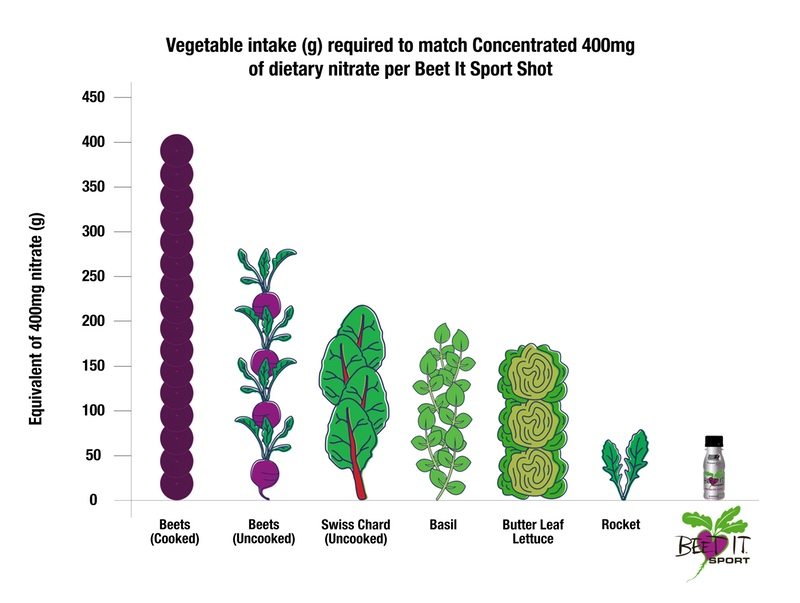
The latest research from the University of Exeter was carried out on 36 team-sport players (football, hockey and rugby), who were given one BEET IT Sport shot per day over a five-day period. The high-intensity intermittent sprint running protocol used was designed to closely mimic match-play running in team sports such as rugby, football and hockey.
The manageable intake of one 70ml beetroot shot per day was shown to significantly increase sprint performance over distances of 5m (by 2.3%); 10m (by 1.6%) and 20m (by 1.2%). Although small, these improvements in short-duration sprint performance are ‘highly meaningful to sports performance outcomes and could mean the difference between winning and losing.’