


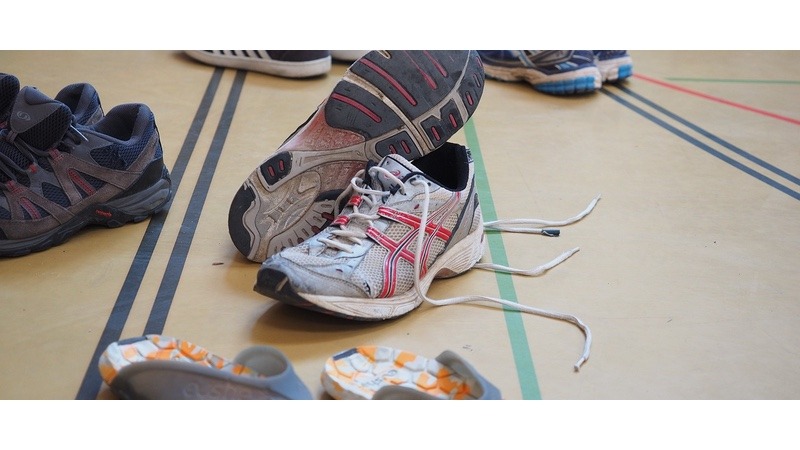
In a newly released annual running report by SportsShoes.com, researchers have reportedly revealed that… ‘75% of runners are wearing shoes that could potentially damage their feet.’
Running retailer SportsShoes.com noted that, with so many people taking up running, and mass numbers of people getting involved in marathons and half-marathons for the first time, it wanted find out how many might be at risk sustaining injuries and wearing unsuitable shoes.
According to SportsShoes.com, just 24% of runners change their run shoes at least once a year. While the need to do so varies depending on running style, terrain, build and whether an individual might wear running shoes for other activities too, changing a pair of running shoes is recommended for every 500-750 kilometres that are run.
The largest proportion of people surveyed within the report said they run 2-3 times per week, and if these people are running 5k every time they wear their running shoes, it would be recommended that they change their footwear at least once a year.
With just 24% changing their shoes that often, SportsShoes.com states… ‘It can be assumed that a huge 75% of runners are using shoes that could be damaging to their feet.’
The research for SportsShoes.com polled 2,120 respondents overall, including 1,002 that regularly go for a run (aged 16+), and 1,118 who don’t.
Regular runners were deemed to be those who said they run more than once a day, every day, 4-6 times a week, 2-3 times a week, once a week, once every other week or once a month. While, those who said that they run once every six months, once a year or never were deemed ‘non-runners’.
20% of respondents stated that they use their running shoes as their main form of footwear, for example, when they run errands or go shopping.
SportsShoes.com spoke to running technique specialist Paul Mackinnon, from the Balanced Runner, to get his advice on how runners can ensure they’re wearing shoes that will protect their feet, while not throwing away trainers they love.
Mackinnon said “There’s no need to throw out old running shoes; instead, use these for all your non-running activities, so you can have the freshest pair in the rotation as your running shoes.
“If you’re out all-day shopping or walking around in your running shoes and then go for a run, you’ve spent the whole day compacting the midsole. When you go out for a run after this, you’ll be running on compacted and harder shoes, which are more likely to cause injury.”
The research for SportsShoes.com also found that less than 1 in 10 (7%) of runners have had a gait analysis performed. With this in mind, the retailer notes that over 90% of runners don’t know what style of runner they are, and as such can’t select shoes with the appropriate levels of support and cushioning.
Paul Mackinnon at Balanced Runner added “A gait analysis can be extremely useful to get an understanding of why you may be getting specific injuries, highlight where you may be missing out on efficiencies, and what parts of the body are being used most.”
The research also showed that as little as 22% of runners have bought shoes specifically for their running style, suggesting that almost 4 in 5 of runners could be at risk of injuring ourselves by running in shoes that aren’t designed for the way they move.
19% of runners stated that they have sustained an injury, and half of those continue to run while injured. From this, it’s perhaps no surprise that 31% of runners also say they have injuries lasting longer than a year.
Dan Cartner, Head of Marketing at SportsShoes.com, said “With so many more people running than ever before, and with running shoes the bread and butter of who we are, we were really keen to find out how many runners could be limiting their own success, and even putting themselves at risk of injury, due to not having enough knowledge around running styles and the differences between different running shoes.
“We were shocked that the numbers are so high, and that so few runners are investigating tools like a gait analysis that can have such an enormous impact on both comfort while running, but also improvements and minimising the risk of injury.”
He continued, “Runners don’t need to do this in person, as there are several ways you can assess this from home, for example, the wet footprint test can help you identify whether you under or over pronate, and requires just a bowl of water, a dark piece of paper and your feet! You can also find online gait analysis tools, where all you need to do is upload a video of yourself running.
“We hope that by encouraging more conversation around this, more runners can take steps this year (and particularly throughout marathon season) to help them enjoy the sport to its fullest and avoid any unwanted effects on their running journeys thanks to their shoes.”
www.sportsshoes.com/running-report