

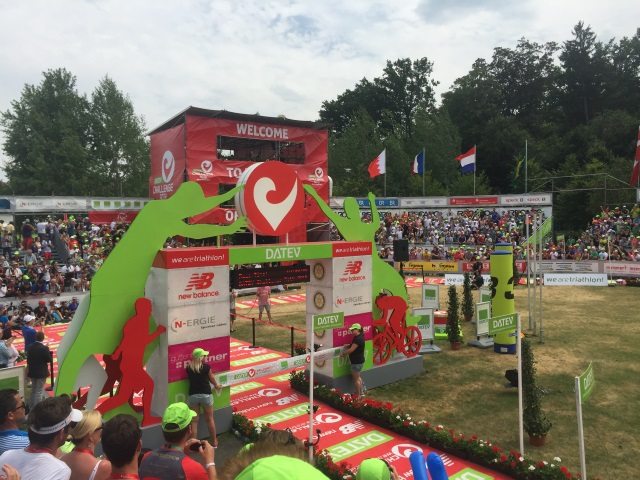
In our final post on day two of the TBI Global Triathlon Conference – a number of themes and issues were addressed including sponsorship, big data and Lance! Day two of the conference was held on the Saturday. The main event of Challenge Roth, on the Sunday, then followed as a key draw for a number of attendees.
- TBI Global Triathlon Conference – part 1
- TBI Global Triathlon Conference – part 2
- TBI Global Triathlon Conference – part 3
Day two continued with a panel entitled: ‘Athlete Sponsorships and the Changing Nature of Our Industry’. Following on from Macca’s views on athlete sponsorship and the need for professionalism, this session provided a useful insight into sponsorship from a brand and team perspective.
The panel consisted of:
- Bob De Wolf, General Manager, Uplace-BMC Pro Triathlon Team;
- Peter Hurley, CEO, American Bicycle Group (QR & Litespeed); Corporate Secretary, Triathlon Business International (TBI); and
- John Duquette, Managing Director, blueseventy
With the session chaired by Peter Hurley, a number of points were raised by the panelists on the day and we’ve summarized a few of the discussion areas below:
John Duquette (JD): If we take one athlete as an example, [XTERRA pro triathlete] Conrad Stoltz shows how it should be done. As a sponsoring brand, at blueseventy, we hear from Conrad pre-race and post-race. He provides a full update. Not all athletes are as proactive. Social media activity goes without saying these days. Athletes need to think ahead. Just being fast doesn’t cut it any more.
Bob De Wolf (BDW): We select athletes for the Uplace-BMC Pro Triathlon Team based on their potential to win long distance triathlon races. We capture data on performance/fitness and also conduct interviews with the athletes. It’s essential that each athlete fits within the culture of the team.
Peter Hurley (PH): For Quintana Roo and Litespeed, we seek out athletes who can give a personalized approach. It’s important that athletes have a personal story and can communicate that story as part of the sponsorship engagement.
JD: In terms of events, Kona gets the most media attention. First out of the water gives bragging rights. Yet, with the Olympics we can’t brag about it for a few weeks after the event, which is crazy.
BDW: For our team, Kona is the ultimate goal. We’ve had successes at Kona and are pushing for this again in 2015. We also welcome the [Challenge Family] Triple Crown [in the Middle East] and will battle for this, this year. Alongside Kona, the Triple Crown gives a back story. It makes good news and is what the sport needs.
JD: The Triple Crown does drive interest. A six figure payout to the winner certainly draws attention to the race.
The panel was asked about TriEqual, the organization ‘dedicated to fairness, development and equality in the sport of triathlon and the founders of the #50WomentoKona movement.’
John Duquette responded, “We do believe in equality and see the sense of having 50 female pro athlete slots if there are 50 male athletes at Kona. Although, we’d question if there are enough women, or athletes in general, to justify those 50 race slots. Perhaps Kona should be split 35/35 male-female, as we have to seriously look at the number of athletes in with a real chance of a top 10 place.
Turning to a question about raising triathlon’s profile, Bob De Wolf said, “For us it’s important to grow the general, mainstream media coverage of triathlon. How do we do this? Perhaps a think tank or working group could be used to come up with ideas?

Panelists were then asked about the allocation of sponsorship funds:
PH: For our business, we look at our sponsorship across athletes and events. We tend to go more with events than individual sponsorships, as this gives us a grassroots impact on the ground. Having done this, we then turn our attention to sponsorship of athletes and the selection based on each athlete’s back-story.
JD: We effectively take a pyramid of events and athletes, with Kona ultimately helping as a legitimizer of the brand.
BDW: Kona is certainly key and that is why we target our athletes at this event. We have a leading Belgium newspaper following our athletes leading up to and on race day. It has 1 million readers and they are reporting on the team for a week whilst they are in Kona. So, the mainstream general media does have interest in Kona.
BDW: If we look at other sports such as cycling, there are lots of top races; classics and semi-classics. It’s important, as Macca mentioned, that triathlon really leverages its key events in Roth and Kona. From here, the general media will create stories.
JD: In the US it’s all about long course. The US triathlon specific media is all about long course. If we turn to Olympic athletes, the sponsorship of [leading World Triathlon Series athlete] Gwen Jorgensen was an interesting part of our business. Unfortunately we were outbid on the [wetsuit] sponsorship of Gwen. Hopefully, going towards the Olympics, she can continue great things. But, the commercial reality is that an athlete such as [long distance triathlete] Heather Jackson can activate more than Gwen with the core US triathlete audience.
PH: We sponsor over 30 events and find that they help with brand awareness and engagement. Events also offer an opportunity to sell product with our dealer base able to liaise directly with athletes. On the ground, events also enable us to educate about Quintana Roo and Litespeed. This event engagement approach has been the largest element of our marketing budget. We do count on the event to help us measure the impact of our investment. We do this on a region by region basis in the US, looking at how our market share has developed in alignment with event sponsorship.
JD: Events do enable athletes to demo the product. Being on the ground is important.

The conference then had a presentation from Robert Püstow, Strategic Business Development Manager EMEA at ACTIVE Network. Robert spoke about ‘Big Data & the Triathlon Industry – Using Data to Drive Better Decisions & Efficiency’.
The presentation touched upon a number of areas. Robert noted that ACTIVE sees itself as a total event management system and solution company. He noted that ACTIVE Network’s acquisition of IPICO Sports, a leading global timing player, gave a further strength to ACTIVE’s portfolio.
The presentation explored the many benefits for event directors in exploring ‘big data’ through, for example, an analysis of the trends on pricing and the types of events within a race director’s main active geographies. Robert put forward a number of suppositions and areas for discussion. These included:
- A look at RFID as a potential opportunity for cashless payments throughout an event;
- A closer inspection of other mass participation sports, such as color run, which offer potential learnings for triathlon;
- A review of the airline industry and how yield management within this industry could potentially be applied to mass participation sports – with pricing potentially based on the capacity and sell-through of events rather than the more traditional focus on calendar days leading up to an event.
Robert explored areas such as customer loyalty programs and suggested that these could also be rolled out to good effect within the multisport world.
The day concluded with a final panel and delegate discussion on ‘The Hottest Topics in Triathlon’. This open discussion among attendees was moderated by Jack Caress, Founder/CEO, Pacific Sports LLC and President of Triathlon Business International (TBI). He was joined by Jochen Schmahl of BrandRelationship Consulting and Gary Roethenbaugh of MultiSport Research.
The panel session started with a presentation by Jochen, which explored some of the trends identified within the German triathlon scene. This then opened up into a group discussion. Here, the subject of Lance Armstrong generated an interesting debate – with Lance clearly a polarizing figure in the multisport industry as well as the cycling community.
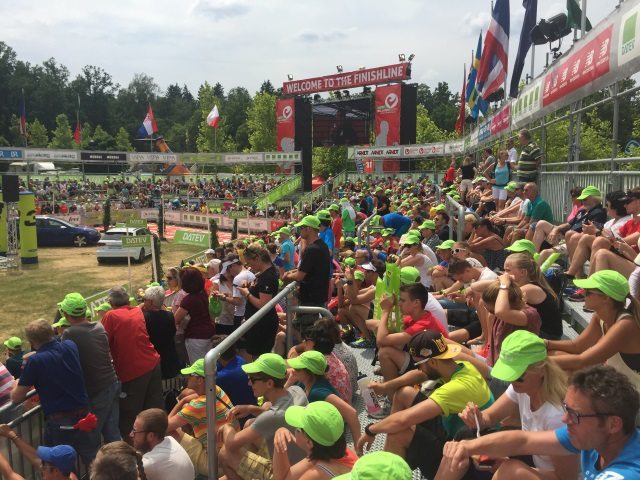
The final session included discussion on a number of key areas that had been identified by speakers and conference delegates. These included:
- The importance of selling the history of triathlon to build awareness
- The role of teams within triathlon – and how these could transcend long-course and short-course racing
- The emerging markets of triathlon, such as China and the Asia Pacific region, and the opportunities these present
- The possibility of a think tank to keep triathlon’s spirit of innovation alive
- The importance of enforcing strict anti-doping policies to ‘keep it clean’ across the age group and pro triathlon communities
- The role of celebrity and how celebrities help triathlon reach a mainstream audience
- The importance of innovation in all areas of the sport – coupled with this, the opportunities presented by online streaming of race broadcasts, GPS for event engagement and collaboration with platforms such as Strava
- The ongoing dialogue required with kids and mums in order to boost the next generation of the sport
www.triathlonbusinessintl.com
www.challenge-family.com