


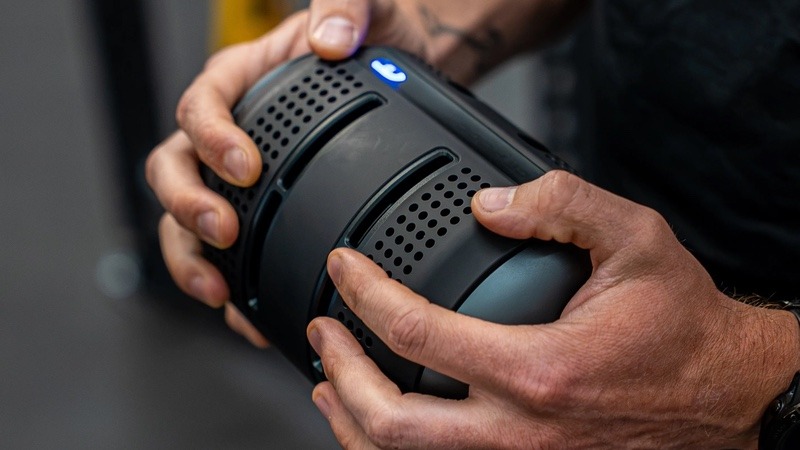
Boulder, Colorado-based recovery technology manufacturer NICE Recovery has introduced ROCC, a handheld, iceless palm cooling device engineered to assist athletes with fatigue management and intra-workout recovery.
Unlike conventional palm cooling methods focused primarily on core body thermoregulation, NICE Recovery’s latest research highlights the physiological impact of precise temperature regulation on the nervous system during active training breaks.
Pilot study findings and technology
NICE Recovered cites a randomised crossover pilot study involving 19 trained athletes, in which participants using the ROCC device during rest intervals between exercise sets completed 9.5% more total work in 14.3% less active exercise time compared to control sessions without cooling.
Additionally, athletes using ROCC averaged a 27.1% higher work rate while maintaining similar repetition volumes, with 17 of the 19 test subjects showing overall performance improvements.
Key technological and design specifications include:
- Thermal Precision: Uses a closed-loop thermal engine to maintain a constant cooling surface temperature of 57°F (13.9°C) without requiring ice or water, avoiding issues that may be caused by excessively cold temperatures.
- Intra-Workout Usability: Designed for integration into standard rest periods, featuring built-in haptic timer pulses every 30 seconds for sessions up to five minutes.
- Battery Performance: A single USB-C charge provides over 90 minutes of continuous operation, supporting two to three full workouts.
Physiological impact and academic research
Physiological monitoring during the pilot study indicated that athletes using ROCC trended toward releasing approximately 13% more heat on average across initial sets, with faster autonomic recovery markers between efforts. A key statistical finding demonstrated that autonomic recovery variability was reduced by approximately 80% when using the device.
Dr Ben Cowin, DC, ATC, Clinical Director at NICE Recovery, said “There has long been an assumption that colder is better, but that isn’t the case. When the hand gets too cold, the blood vessels clamp down and close off the very pathway you’re trying to use.
“Getting the temperature and duration right, and delivering them the same way every time, is what makes palm cooling precise enough to study properly. What we’re beginning to see is that palm cooling doesn’t erase fatigue, but it may give the body more room before fatigue takes over.”
Cowin added “Recovery has traditionally applied to what happens after training. What if we can start recovery during training or competition? What we’re seeing suggests palm cooling may extend an athlete’s runway before fatigue takes over. A few more quality reps in a single session is a small gain, but when that happens consistently, session after session across a full season, the added work has the potential to have significant impacts.”
NICE Recovery is sharing its protocol and data with academic institutions for independent verification. The University of Essex’s School of Sport, Rehabilitation and Exercise Sciences, led by Dr Ben Jones, is currently conducting an independent trial evaluating ROCC during football hydration breaks in a temperature-controlled lab, with initial findings expected in early 2027.
The ROCC device is available internationally for US$975.
Related posts:
 Tymewear VitalPro offering lab-grade metabolic insights for real world training conditions
 Tymewear wearable tech adds real-time respiratory tracking to Wahoo ELEMNT bike computers
 Expanded sensor integration and firmware updates for Wahoo ELEMNT bike computers
 Garmin rolls out Tacx NEO 2T with Zwift Cog and Click